Your business requires regular cleaning scheduled according to risk factors, operational volume, food allergen presence, and regulatory checks, plus verification documentation supporting HACCP compliance, regulatory audits, and government health requirements. The following sections detail critical cleaning system elements.
Essential Summary
- Brampton's food safety cleaning specialists provide services to restaurants, grocery departments, commissaries, warehouses, bakeries, schools, mobile vendors, and allergen-sensitive operations.
- Sectional methods sanitize high-touch surfaces, food-contact equipment, kitchens, floors, drains, restrooms, and storage areas for preventing cross-contamination.
- Qualified vendors confirm proper chemical concentration, alignment, and exposure duration, then log conclusion with swabs, reviews, and corrective-action records.
- Hygiene timelines must respect hazard, production volume, switches, releases, and guidelines, with everyday, periodic, and annual tasks allocated by section.
- Vendors ought to possess hazard analysis knowledge, sanitation understanding, safety training instruction, coverage, endorsements, colour-coded instruments, and inspection-ready cleaning documentation.
Food Safety Cleaning Requirements for Brampton Facilities
You must maintain food safety cleaning if your facility is regulated by public health inspection, food premises regulations, or internal HACCP-based controls. This covers restaurants, cafeterias, commissaries, grocery food departments, butcher shops, seafood counters, convenience stores, and institutional kitchens.
You also need compliant food safety cleaning in warehouses, food manufacturing plants, cold storage sites, retail bakeries, school nutrition programs, banquet halls, and meal delivery hubs. Mobile and seasonal operations count too, including mobile kitchens, festival sellers, and temporary food stands. If your staff handle ingredients, section prepared foods, heat finished items, or keep allergens stored, your facility needs documented cleaning act now protocols. In Brampton, sanitation isn't optional; it's part of lawful, functional, and customer safety adherence.
What Do Brampton Cleaning Professionals Handle?
You need cleaning experts who sanitize high-touch surfaces, kitchen areas, floor surfaces, and bathrooms to meet food safety and public health standards. They target these areas because they present the highest risk for cross-contamination, slipping risks, and hygiene violations.
If you comprehend their cleaning services, you'll be able to confirm your facility meets required operational and regulatory standards.
High-Touch Surface Disinfection
establish how frequently each point is cleaned
ensure successful sterilization
Food Prep Areas, Flooring, and Sanitary Facilities
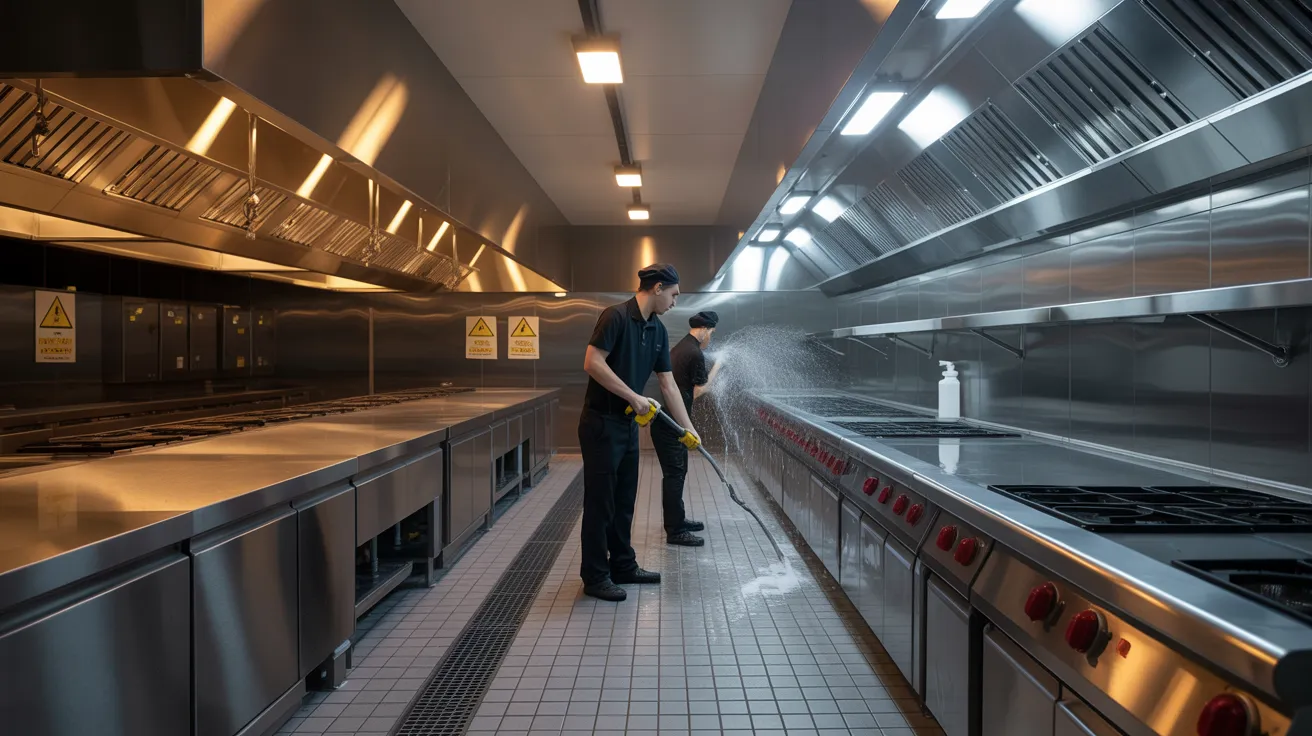
Professional cleaners in Brampton concentrate on kitchens, floors, and restrooms given that each location involves specific contamination control, falling hazards, and health code requirements. In industrial kitchens, you need degreasing on cook lines, equipment exteriors, drains, prep surfaces, and splash zones to minimize bacterial growth and pest activity.
Floor care that is documented should equally be anticipated. Technicians clean and remove buildup from grout, tile, and vinyl flooring, then apply appropriate drying controls so you can reduce slip incidents and maintain code-compliant conditions. They also handle entry points where dampness and dirt enter the building.
For restroom sanitation, cleaners disinfect touchpoints, fixtures, partitions, dispensers, and waste containers, then replace products and reduce odor. They also maintain restaurant cleaning supply rooms where product storage, sink cleanliness, and drain systems impact daily sanitation standards and worker protection.
The Importance of Food Safety Cleaning in Brampton
Brampton businesses need to implement food-safe cleaning standards for satisfying legal standards and passing inspections. You also reduce cross-contamination by cleaning and sanitizing food-contact surfaces, equipment, and high-touch areas correctly. Most importantly, you help protect public health by lowering the risk of foodborne illness in your facility.
Food Safety Regulations
Brampton food companies must comply with mandatory safety protocols, so hygiene maintenance is critical to satisfying health codes, ensuring the safety of customers, and eliminating penalties. You must maintain hygienic food handling zones, documented cleaning schedules, correct sanitizer application, and verifiable staff procedures that align with municipal and provincial inspection expectations.
When inspectors examine your operation, they determine whether your cleaning program supports secure product handling, tool sterilization, waste handling, and restroom sanitation.
Cross-Contamination Prevention
Following health code standards depends on your skill in stopping cross-contamination in daily food handling and cleaning. You should isolate raw items from prepared foods, sanitize prep surfaces between tasks, and store chemicals away from food-contact items. Clear procedures reduce transfer risks and promote steady regulatory adherence.
You could implement allergen segregation to stop main allergens from reaching common areas, containers, or machinery. Apply separate boards, color-marked equipment, and rigorous tool identification so team members avoid blending products throughout cooking or delivery. Enforce washing hands following raw meat, seafood, eggs, or allergen-containing products. Swap cleaning rags frequently, and check sanitizer strength with test strips. When employees learn these procedures each shift, you create a cleaner, safer operation that meets Brampton's food safety expectations every day.
Community Health Protection
When sanitation protocols fails, you don't just face inspection failure—you increase the chance of foodborne illness affecting customers, staff, and the wider Brampton community. You also undermine your responsibility in safeguarding community wellness, especially in high-traffic food premises where pathogens travel quickly through surfaces, equipment, and touchpoints.
You depend on cleaning procedures that eliminate contaminants, effectively sanitize, and verify results. This involves maintaining exposure times, deploying approved disinfectants, maintaining records, and training employees to meet health-unit expectations. These initiatives promote pathogen control by suppressing pathogens before contaminating food or hands. In Brampton, robust sanitation protects at-risk groups, minimizes disease spread, and demonstrates accountability. When you maintain standards, you go beyond regulations—you substantially reduce risk and promote secure food service throughout the city.
How Can Cleaning Practices Ensure Food Safety Compliance?
Adopting thorough cleaning protocols solidifies food safety compliance by decreasing contamination threats, limiting pathogen development, and keeping your facility aligned with sanitation requirements under HACCP-based programs and public health regulations. You verify that food-handling surfaces stay visibly clean and microbiologically controlled, facilitating documented preventive controls and inspection readiness.
Effective cleaning also improves allergen control by eliminating residues that can trigger undeclared allergen exposure. by removing residues that can provoke undeclared allergen exposure.
When Do You Schedule Commercial Cleaning?
daily regular cleaning
Drain systems, vents, storage racks, and hard-to-reach zones call for every week or every month attention, guided by inspection data and sanitation logs.
How Do You Choose Brampton Cleaning Experts?
Start by screening providers against food-safe sanitation requirements, not cost only. You should verify that each company understands CFIA, public health, and HACCP compliance standards relevant to your facility. Ask for proof of insurance, WHMIS compliance, documented staff training, and supervision practices. Review whether technicians understand contamination prevention, chemical handling, and traceable sanitation records.
You must also evaluate business consistency and accountability. Seek references from Brampton food companies, then assess response speed, corrective processes, and communication quality. Ensure the company supports supplier audits and can provide inspection-compliant records when authorities or third parties demand verification. Verify equipment care, colour-coded tools are deployed correctly, and operational-specific risks are understood. A reputable service safeguards compliance, product safety, and your brand reputation.
What's included in a sanitation cleaning strategy?
Create a documented strategy that clearly outlines every sanitation task, standard, and responsibility prior to beginning production. You should document cleaning frequencies, approved chemicals, dilution rates, contact times, tools, and verification methods for each area, section, and machine. Be sure to include pre-operational inspections, corrective actions, and employee training requirements.
Your program should also cover cross-contamination controls, waste handling, pest-prevention measures, and documented schedules for bathrooms, drainage systems, surfaces, and food-preparation zones. Explain how you'll keep raw and prepared foods apart, support ingredient tracking, and maintain accurate allergen labeling through validated cleaning between product changes. You should designate accountability, maintain signed records, and compare results against regulatory standards, HACCP controls, and customer requirements. When gaps appear, revise procedures immediately and retrain staff.
Frequently Posed Questions
Do cleaning services operate during nighttime hours at Brampton facilities?
If you manage controlled environments, you'll also need documentation that enable inspections and maintain assurance.
Can sanitation professionals handle hazardous incidents?
Yes, you can discover many Brampton cleaning professionals providing spill response options. They handle hazardous incidents, assess dangers, isolate contamination, and initiate rapid cleanup to minimize exposure and prevent business disruption. You should verify response rates, credentials, PPE measures, and waste procedures. If your facility must meet compliance standards, select a service that documents events, adheres to standards, and ensures audit compliance.
Will green disinfectants sanitize safely food-handling equipment?
Yes, plant-based sanitizers can be safe for food-contact surfaces if you select items marked food-safe and complying with regulations. You should validate contact duration, dilution ratios, and rinse requirements before use. Many botanical formulations lower chemical hazards, but you should gather evidence of effectiveness against relevant pathogens. To preserve residue-free areas, you should follow exact manufacturer guidelines and validate the sanitizer satisfies food sanitation requirements.
Can sanitation programs adjust with seasonal shifts?
Without question, cleaning schedules adapt well for seasonal variations. Adapt schedules, staffing, cleaning agents, and verification steps to correspond to seasonal patterns while sustaining compliance standards. Reduce operational delays by planning disinfection surrounding changeovers, peak volumes, and usage patterns. Further modify written procedures, employee training, and monitoring protocols to reflect transient threats, additional allergens, or increased soiling. Periodic assessments maintain your schedule current.
Are professional cleaning companies offering staff training on sanitation best practices?
Absolutely, professional cleaning companies frequently provide employee education on sanitation best practices. Your staff receives training on proper chemical use, contact times, cross-contamination prevention, equipment disassembly, and paperwork. They typically align guidance with HACCP, GMP, and CFIA or regional health authority standards. Many also perform sanitation audits to verify compliance, identify gaps, and strengthen corrective measures. This helps you maintain uniform standards, pass inspections, and lower contamination dangers consistently.
Conclusion
Partnering with Brampton commercial cleaning and food safety experts goes beyond tidying—it ensures your facility meets inspection standards and your standards are defensible. From kitchen areas to production zones, each sanitized surface and maintained corner lessens contamination risk and avoids costly disruptions. By scheduling maintenance at suitable frequencies and executing a comprehensive cleaning strategy, you protect staff, your customers, and your image. In a tightly controlled market, clean environments are non-negotiable—they're vital to proper management.